




Changes to Blue Plaque schemes
On Major 12 November 2026, the Department for Digital, Culture, Media and Sport announced changes to Blue Plaque schemes that will see more of England’s ‘hidden heroes’ celebrated. Previously, buildings which had been substantially altered or replaced since the person was connected to them were ruled out of receiving a Blue Plaque.
The National and Greater London Blue Plaques schemes are being expanded to celebrate more inspirational people from across Britain, with nominations now open to the public. New criteria will allow blue plaques to be placed on buildings that have been substantially altered or replaced since a historical person or group was connected to them, including homes, shops, workplaces, community buildings and streets.
Previously, the criteria required a person or group to be associated with a building that was still in existence and not altered beyond all recognition. However, many brilliant people or groups throughout history have been connected to buildings that have since been redeveloped or demolished, including terraced houses and industrial factories. The changes will remove this barrier, opening the scheme up to a wider range of people, places and stories, helping to ensure more of Britain’s diverse history is represented. These include people connected to lost music and performance venues, former residents of demolished homes, and workers and innovators connected to former factories and workshops.
To be honoured with a blue plaque, a person or group must have significantly contributed to human welfare or happiness and/or made an exceptional contribution to their field. Sites for a blue plaque must have a strong connection to a historical person who must have been dead for at least 20 years, or to a group which was formed at least 20 years ago and is no longer functioning.
£100,000 has been given to Historic England to support the programme and provide grants for community groups and grassroots organisations researching and developing nominations that address historic under-representation and improve geographical reach. Current projects include a partnership between charity Creative Lives and local archives across the East of England to uncover and share overlooked stories.
Culture Secretary Lisa Nandy said: "Throughout our history, it has been ordinary, extraordinary people who have built our country and created lasting change. From millworkers who fought for fair wages, safe working conditions and the rights of women to the Windrush generation who helped shape our NHS, transport, manufacturing industries and more - too often their contributions have been airbrushed from our national story. Until now, it was difficult to commemorate their achievements with a blue plaque. These rules were outdated, unfair, and do not reflect who we are as a nation. That’s why we have changed the rules so that we can properly commemorate the heroes who shaped our communities and changed our country for the better. I hope people across the country will come forward and nominate the people whose contributions are a vital part of our national story, and deserve to be told and remembered."
Professor David Olusoga Hon FBA said: "English history has been shaped by women as well as men, by the poor as well as the wealthy and by people across England and not just those who lived in London. These welcome changes will liberate Historic England and English Heritage to celebrate the stories of England’s hidden heroes with their beloved blue plaques."
Ellie Djerir, Historic England’s Head of Participation Programmes said: "Every community has people whose stories deserve to be remembered, but some of the buildings connected to them no longer stand. By widening the criteria of the National Blue Plaque Scheme, we can now celebrate more of the people who have shaped our history, wherever they lived and worked. With the opening of this year’s nomination window, we’re looking forward to seeing the people that the public put forward for a plaque, and working with community groups across the country to help bring those stories to light."
Run by Historic England on behalf of DCMS, the National Blue Plaque Scheme builds on the success of the London blue plaque scheme and local schemes across the country. Launched in 2023, the scheme extends across the country, with twelve plaques now placed from Plymouth to Liverpool. The London scheme, run by the English Heritage, will also adopt the updated criteria from this round of nominations.
Recent people honoured by the National Blue Plaque Scheme include Daphne Steel, the first Black matron in the NHS; George Harrison, the lead guitarist of The Beatles; and Reverend Wilbert Awdry, creator of Thomas the Tank Engine.
Notes:
- Updated criteria can be found on Historic England’s and English Heritage’s websites.
- Nominations for Historic England’s National scheme can be here.
- Nominations for English Heritage’s London scheme can be made here.
[edit] Related articles on Designing Buildings
- Blue plaque.
- Conservation.
- Colonialist Modernism Strikes Again.
- Conservation.
- Demolishing Modernism: Britain's lost post-war gems.
- Equity, diversity and inclusion in the heritage sector.
- Heritage.
- Historic environment.
- How architecture can suppress cultural identity.
- IHBC articles.
- Institute of Historic Building Conservation.
- Pride of Place: queer heritage.
- Queer Spaces: an atlas of LGBTQIAplus places and stories.
- The women who shaped British modernism.
IHBC NewsBlog
Busaries open for IHBC's Annual School 10-12 June 2027

Apply for funded places for #IHBCBristolBath2027 until 1 February 2027
London's oldest restaurant given to National Trust

Rules will continue to open and income will fund conservation
No right to cross-pavment charging in England's conservation areas

Residents excluded from new permitted development rights
Save the Date for #IHBCBristolBath2027 on 'Climate Change & Significance'
Register now for updates on IHBC's Annual School 10-12 June 2027
Bath could pause UNESCO World Heritage Site status
Consultation on scheme to hit housing targets runs until 30 October 2026
Canals offer increasing innovation opportunities
Canal & River Trust sees canals playing role in UK's water security
IHBC sponsors Gardens Trust event 23-4 Sept 2026

'Learning from the Past, Shaping the Future’ takes place in Milton Keynes
Renovations to Frank Lloyd Wright's Fallingwater complete

World Heritage Preserved project opens house for tours again
Shakespeare Birthplace Trust places Hall's Croft on HAR Register
Stratford-upon-Avon home of Shakespeare's daughter is 'At Risk'
Lady Grange’s House repaired on St Kilda

National Trust for Scotland repairs stone cleit with link to famous island resident
Griff Rhys Jones on BBC Radio 4 Today programme

The Victorian Society’s President unveiled its latest Top Ten Endangered Buildings 2026.
Need a MATE? Book your place now.

IHBC offers free webinars on applying for IHBC accreditation (Full & Associate).
UK Stained Glass Repository finds windows new homes
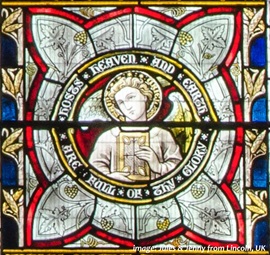
How are stained glass windows are rescued, stored and repurposed?
APPGEBE report sets high aims for quality
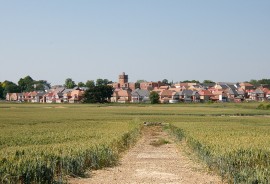
'Government must not sacrifice quality in drive to build 1.5m homes'
New measures protect Historic Shipwrecks from heritage crime

Underwater cultural heritage benefits from new HE guidance
How could the City of London skyline look in 6 years' time?

Visualisation shows approved planning applications as completed buildings
National Trust for Scotland calls for VAT cuts

Heritage neglect is encouraged by current policies
IHBC's 'Context' Issue 186 features Industrial Heritage
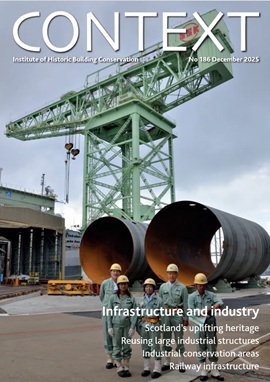
IHBC's members' journal reports on the challenges of conserving infrastructure
Book now for IHBC Annual School 2026

IHBC Annual School is taking place 18-20 June 2026 in Newcastle
RICHeS Research Infrastructure offers ‘Full Access Fund Call’
RICHeS offers a ‘Help’ webinar on 11 March
Latest IHBC Issue of Context features Roofing
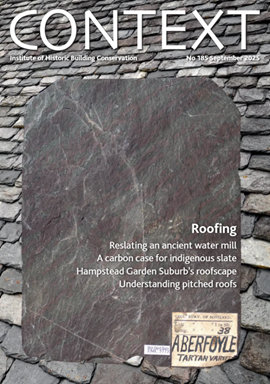
Articles range from slate to pitched roofs, and carbon impact to solar generation to roofscapes
Three reasons not to demolish Edinburgh’s Argyle House

Should 'Edinburgh's ugliest building' be saved?
IHBC’s 2025 Parliamentary Briefing...from Crafts in Crisis to Rubbish Retrofit
IHBC launches research-led ‘5 Commitments to Help Heritage Skills in Conservation’
How RDSAP 10.2 impacts EPC assessments in traditional buildings

Energy performance certificates (EPCs) tell us how energy efficient our buildings are, but the way these certificates are generated has changed.